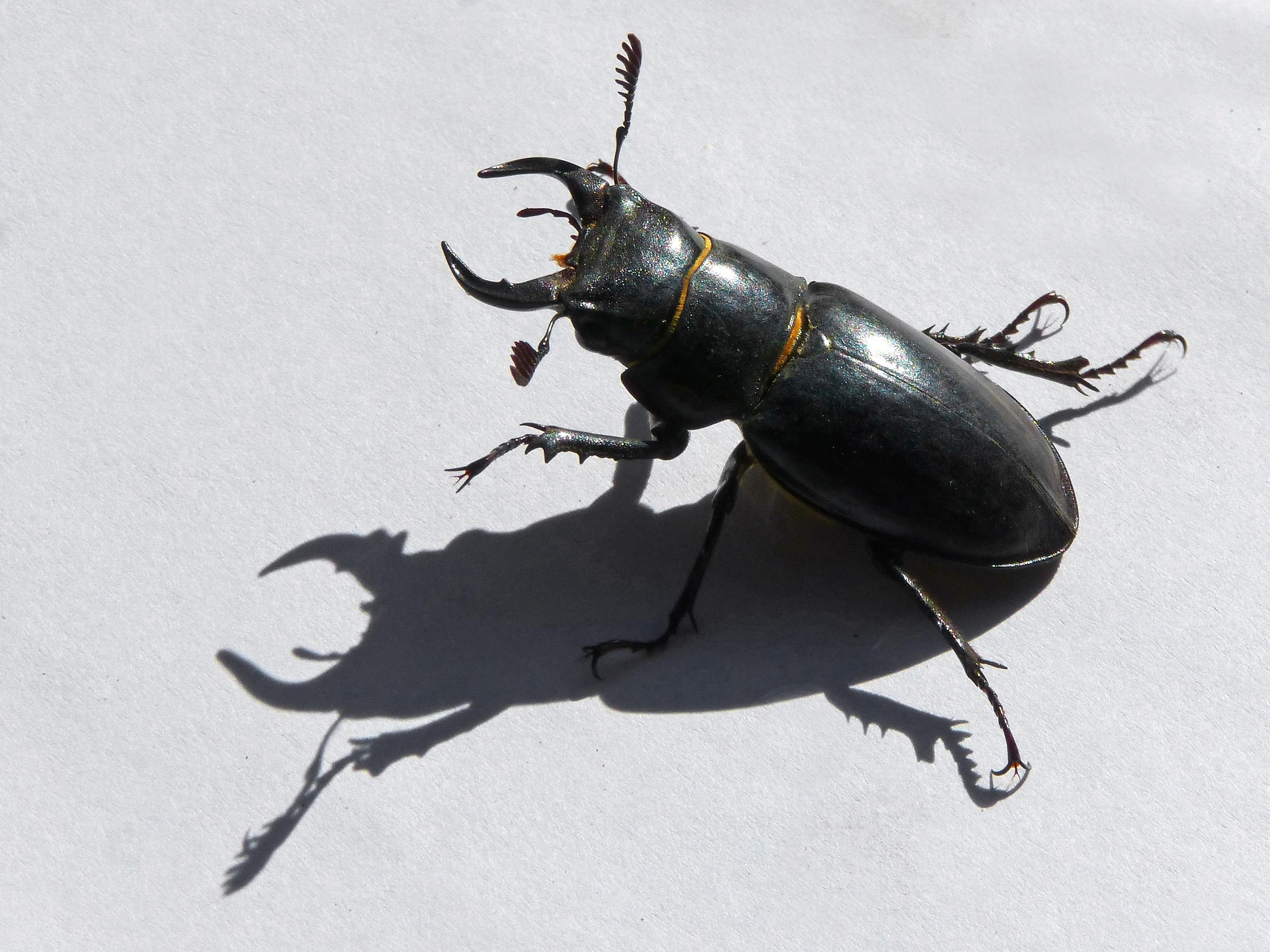

Commentaries on the novella The Metamorphosis, by Franz Kafka overlook its profound message. Most focus on social problems, like isolation, alienation, and family dynamics. But Kafka wrote an existential story.
Kafka’s main theme involves a question that is fundamental to philosophy and the human condition. Are humans body and soul? Or are we just material things? How we answer to this question affects our sense of humanity and morality.
When the protagonist, Gregor Samsa, wakes up transformed into a beetle, he does not react with panic. He remains calm because he still has his human awareness. He is more concerned with the responsibility to his family and going back to work.
Most everyone see themselves and others as a body. We are mostly self-awareness through the face and body characteristics. We strongly judge others according to their physical appearance. Our thoughts and values are as well reflected on the body.
Gregor’s father, mother, and sister know that it is their Gregor who has changed into a beetle. But now they are repulsed by his appearance. They are unable to transcend the physical towards his humanness. They put up with him but there is no caring.
This conflict between the spiritual and physical is the main theme of the story. Gregor tries to reinforce his humanity through his memories and the objects in his room (the dresser, a photo). He attempts to approach his family but is met only with rejection. Eventually he can’t accept the distress he is causing them and their increasing alienation. His spiritual despair brings about his physical death.
We don’t see people turning into giant insects. But there are many who are often rejected, alienated, and mistreated due to their appearance. His story focuses on the lack of introspection and sense of dignity of the common person.
It is what I call the Red Rule of Morality: that you do unto yourself what you do unto others. You become what you do to others. Or inversely, you can’t appreciate in others what you can’t see in yourself.
This theme is reinforced by the parents’ concern for their home, income, and public opinion than the loss of their son. At the end of the story, they recognize how the sister has changed. She has become a voluptuous young woman who is ready for a husband. Most of us only see, and feed, our appearance and greatly neglect our humanity, and in turn, that of others.
Most of us live our lives from the outside. We gloss over our greatest gift chasing the shiny things of the world.
In the Critique of Practical Reason, Kant explains that our humanity is revealed by our morality. Caring transcends physical existence.
In the end, Gregor the beetle remained more human than his family.
Please rate for feedback