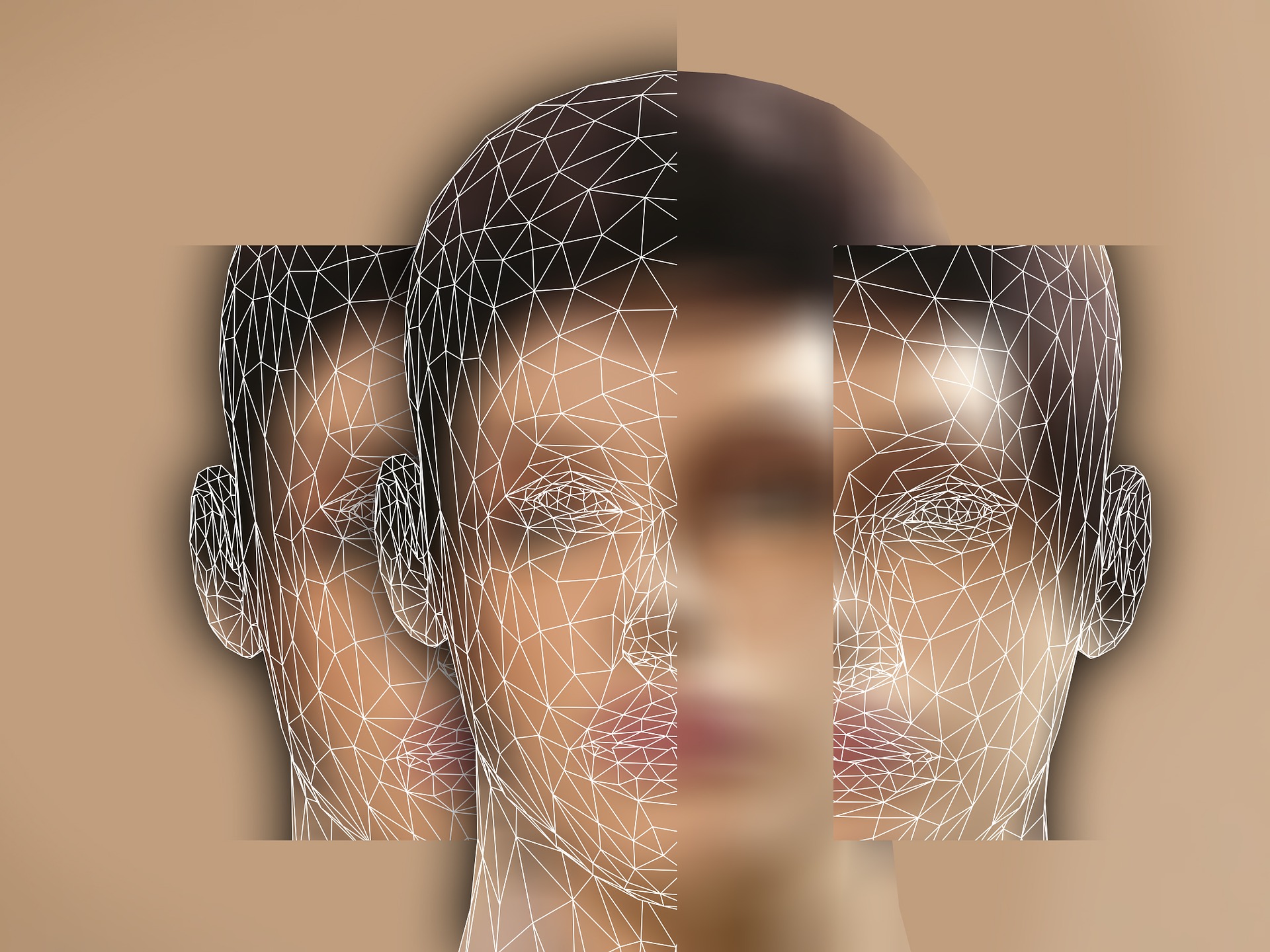

Is there a self? Is there no self? Or is it not-self?
Correct understanding the Not-self Doctrine is essential to deciphering Buddhism. It also makes the path to Enlightenment easier.
The Not-self doctrine was the second discourse expounded by Gautama the Buddha after his Enlightenment. It is this doctrine that clearly distinguishes Buddhism from other religious ideologies and practical philosophies, such as Stoicism. It is also the most controversial and confusing teaching in Buddhism.
Not-self is the translation of the term anatta in Pali, the liturgical language of the Theravada tradition. It is related to anatman, the Sanskrit term used by the Mahayana tradition. These terms denote the absence of permanent self or soul.
The Not-self doctrine is a systematic formula for the realization of Enlightenment:
O monks, the well-instructed noble disciple, seeing thus, gets wearied of form, gets wearied of feeling, gets wearied of perception, gets wearied of mental formations, gets wearied of consciousness. Being wearied he becomes passion-free. In his freedom from passion, he is emancipated. Being emancipated, there is the knowledge that he is emancipated. He knows: ‘birth is exhausted, lived is the holy life, what had to be done is done, there is nothing more of this becoming. (SN 22.59)
It dictates that everything that you can experience is not a true self.
The idea is that once everything is seen as impermanent, the mind will let go all craving and realize Enlightenment.
The doctrine is generally interpreted to mean that there is no individual being that exists. The problem then is that there is also no being that truly suffers or is Enlightened.
As you will see here, a No-Self doctrine is contradictory.
The problem
The Not-self doctrine is formally known as the Anatta-lakkhana Sutta (the discourse on the Not-self doctrine):
“Bhikkhus, form is not-self. Were form self, then this form would not lead to affliction, and one could have it of form: ‘Let my form be thus, let my form be not thus…
“Bhikkhus, feeling is not-self…
“Bhikkhus, perception is not-self…
“Bhikkhus, determinations are not-self…
“Bhikkhus, consciousness is not self. Were consciousness self, then this consciousness would not lead to affliction, and one could have it of consciousness: ‘Let my consciousness be thus, let my consciousness be not thus… (SN 22.59)
Form, feeling, perception, determinations, and consciousness are called the five Khandhas, or aggregates. In Buddhist understanding, these are what constitute a person. Since all the khandhas are impermanent phenomena, they must constitute an impermanent self, or anatta.
But who is the one who knows the khandhas to be impermanent. Who is making the observation?
Form is everything that is material, or the entire universe, but particularly refers to the body. It is quite easy to see that the things of the world are not what you are. The body is made of material things that change over time from the infant to the old person. We can observe the body and use it as a tool. Therefore, the body is not permanent and not-self, or anatta.
Feelings, which include all the body sensations, we can observe to change constantly.
Perceptions are the recognition of things that we experience (e.g., a ball, a circle) and are produced when consciousness comes in contact with the body senses.
Determinations are our thoughts, memories, and emotions. Even though emotions feel very personal, they are things that happen to us (more like a stomachache). They are always transitory and generally beyond our control. We are also aware that thoughts and memories that come and go in the mind. These are therefore impermanent and not-self.
The problem comes in correctly understanding “consciousness is not self.”
You cannot be aware of your own consciousness as an object of your consciousness. This is because you are consciousness, or awareness. No one, not even the Buddha, could know his own consciousness as impermanent. You would have to be outside of your own consciousness to know that it changed. That would lead to a contradictory infinite series of conscious observers.
You can move your attention (your focused awareness) away from your body, your senses, your perceptions, and your thoughts. But you cannot move your attention away from your attention (your awareness) because that is what you are.
Therefore, “consciousness is not self” must refer to the consciousness of things, but not to consciousness itself.
Consciousness, or awareness, is the source of all experience and, therefore, cannot be impermanent. A No-Self doctrine can exist only in theory, or belief, but it cannot be experienced.
Indeed, a No-self doctrine will miss the most profound insight of Gautama the Buddha.
The solution
The philosopher Emmanuel Kant (b.1724, d.1804) was the first to clearly realize that there is a consciousness which binds together all experiences, all perceptions, and the empirical self (the self-perception):
No knowledge can take place in us, no connection or unity of one item of knowledge with another, without that unity of consciousness which precedes all data…This pure, original and unchangeable consciousness I shall call transcendental apperception (B144, A108)
Jean Paul Sartre (b.1905, d.1980) later clarified that consciousness is an absolute subjectivity. This means that we can know things but can never know our own consciousness as an object of consciousness. It is like the eye. We cannot see our own eye seeing, but we know there is vision because we see:
Consciousness is not a special kind of knowledge, called “inner sense” or “self-knowledge” . . . consciousness has no “content”. . . Consciousness is a plenum of existence and this determining of itself by itself is an essential characteristic. (Barnes, 1992, Washington Square Press, p. 28).
We learn the philosopher Edmund Husserl (b.1859, d.1938) that consciousness is always a consciousness of something. It is always directed at an object of consciousness, or intentional. This means that to be conscious of something, that something has to be outside of awareness. Consciousness is always a point of view, an awareness (of).
The Not-self doctrine points to this knowing consciousness. What I call the Pure Awareness. We are an awareness that knows but cannot know itself as an object.
We can only express this realization in negation because this awareness is a pure subjectivity. It is not anything, has “no content.” Sartre described it as a Nothingness: “It is what it is not.”
This is the reason the Buddha never denied or affirmed the existence of a true Self. For to do so would have made it an object of consciousness (an idea) and eclipsed the experience of Enlightenment.
This can get a little complicated, but it is easier to understand the Not-self doctrine with meditation. In deep concentration meditation, one can release all objects of consciousness until what is left is just pure awareness. This is awareness of being aware: the consciousness that is not any-thing (the Nothingness).
This Pure Awareness, the Buddha proclaimed, is unconditioned:
There is, monks, an unborn — unbecome — unmade — unfabricated. If there were not that unborn — unbecome — unmade — unfabricated, there would not be the case that escape from the born — become — made — fabricated would be discerned. But precisely because there is an unborn — unbecome — unmade — unfabricated, escape from the born — become — made — fabricated is discerned. (Nibbana Sutta, U8.3)
Enlightenment is the realization of being pure awareness.
Conclusion
The Buddha formulated the Not-self doctrine to express a reality that is by nature a negation. That is, that awareness, or human consciousness, is not anything that it can be conscious of. With Kant we learn that there must be a consciousness that ties-in all experience into concepts. With Sartre we learn that this consciousness is a pure subjectivity, a Nothingness.
Consciousness is a thing in itself, sui generis. It is not like anything else. It is not made of anything. Human consciousness, or awareness, is pure subjectivity. We can know but not know our-self as an object. Awareness knows itself in the process of knowing things. We know that we exist because we know.
A No-self doctrine is an awareness that knows its own nonexistence, a contradiction. As an Enlightenment, it can only lead to Nihilism: nothing exists, all is emptiness, nothing has value.
Gautama the Buddha discovered that this awareness is also naturally peaceful and the source of true happiness. It is purified through the Eightfold Path.